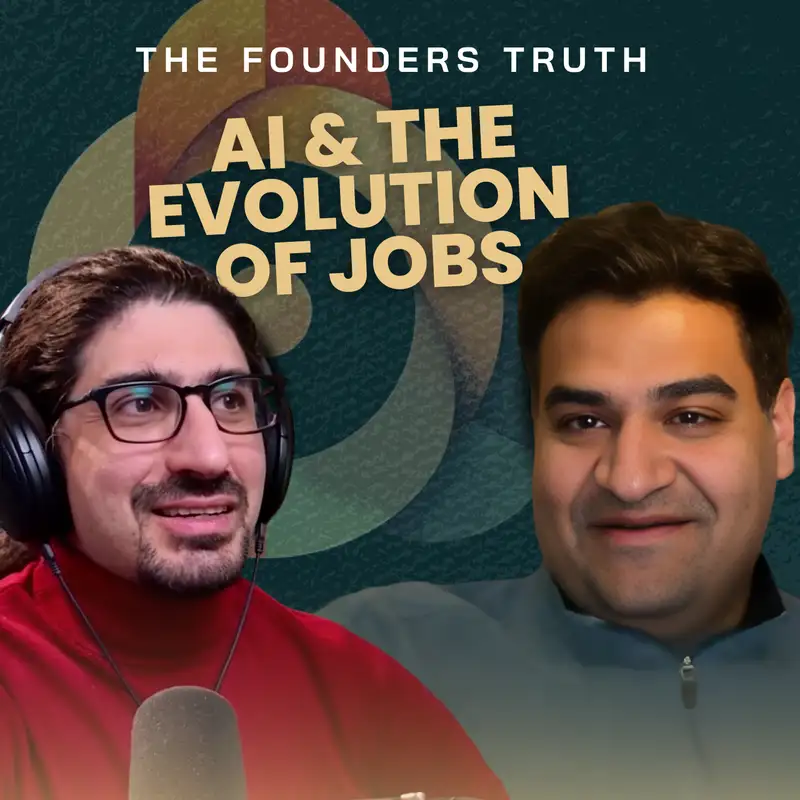
#11 AI Hype And The Two Years Revolution of Private Markets with Gaurav Gupta
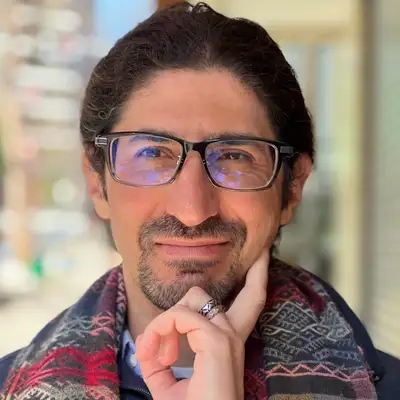
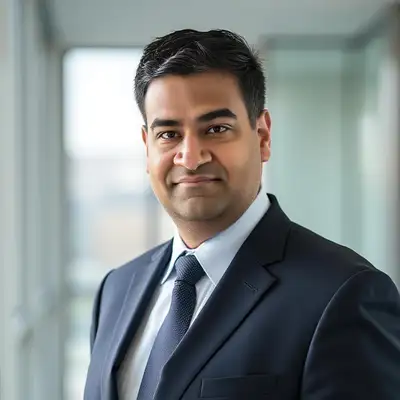
Hello, Unconventional Founders, and welcome to The Founders Truth, a conversation with Carlo Mahfouz and guests. Episode 11. I am excited to welcome Gaurav Gupta, financial services executive and published author with over fourteen years of experience in risk, quantitative strategy and private markets, who as well has led AI driven initiatives supporting 125B plus in assets. So today we're going to examine what happens when transformation cycles collapse from a century to a decade, why private equity and private credit are on the edge of the fastest automation cycle in finance history,
Carlo Mahfouz:and
Carlo Mahfouz:the real bottlenecks in AI adoption.
Gaurav Gupta:Hey, Carlo. How are you?
Carlo Mahfouz:I'm great. How are you, Gaurav?
Gaurav Gupta:I'm doing well. Thank you very much. Thank you very much for having me here.
Carlo Mahfouz:I'm I'm excited for this conversation.
Gaurav Gupta:Likewise. So am I. Alright. So over the last few days, I've been thinking what could we talk about. And the first, which might sound like a cliche these days, but I still would like to start there
Carlo Mahfouz:Okay.
Gaurav Gupta:Is what is your view about AI's hype versus reality?
Carlo Mahfouz:Okay.
Gaurav Gupta:So what do you think about it? What's your view? Where are we in this whole landscape and how does it look like over the next few years?
Carlo Mahfouz:Great question to start with. I don't believe AI is hype in the sense of what it's able to accomplish as far as how far we came technology wise. I think there is a lot of potential. I think it's going to open a lot of possibilities, which probably were not available for everyone to have to. I think when we talk about AI, some of that has existed for a while.
Carlo Mahfouz:So in the sense of now it's accessible to everyone and it's enabling almost anyone today to just jump in and like use it, I think that's powerful. Do I believe that, you know, from the financial investments that are being placed into it and everything else that mirrors it, that might be a little bit an overshoot, but that's always the case. So as well, it's hard to say that that's not, you know, it's not meeting the expectation it is because it's something relatively new. I still believe the human component in how we onboard and understand AI is really the differentiator and the slow kind of cogwheel into this machinery, not necessarily the technology itself. And I think that has been consistent across any of the new technologies that came through.
Carlo Mahfouz:I still think it will take us a little bit longer to figure out what's the right use case, how we're going to leverage it, how we're going to use it outside of the context of just like a better search engine or, you know, your automation, which you never got to do like ten years ago almost. So I think that's the dance we're in now. And because of that, I think in some way, it's very easy to see the future, in some ways, it's very hard. It's very easy to see the future because I think we are consistent in how our onboarding is slow and how, you know, societies will accommodate for it for it. I think on the other side, on the flip side, I don't think it will stop.
Carlo Mahfouz:I don't think there is any intention for its stuff. If anything, it's gonna be like a self feeding machine, which is gonna keep accelerating. So we need to kind of prepare and adjust for that.
Gaurav Gupta:Let me unpack this a little bit. Thank you for this very great viewpoint. So I think two core themes that I can bring out of this monologue, if you will, is investments in AI. Yeah. And second is industrial revolution in a way, right?
Gaurav Gupta:So there have been recent news in the financial market specifically. Goldman Sachs, a matter of fact today, announced their partnership with Claude, and Claude is going to help automate their compliance and accounting team related activities, which is very promising in that world and echoes with your sentiment that it is real. And second, news is, BlackRock CEO Larry Fink was in India past couple of days. And he was with, the CEO of, Reliance, the biggest sort of industry in India, biggest company. And they are joining hands to bring, financial sort of products to retail investors in India.
Gaurav Gupta:Wow. And part of that conversation, Larry Fink's view was that AI is definitely, again, to your sentiment, here to stay. And, the Reliance's CEO, he actually came back and he said it's a multi generational, opportunity. So both of these news, they are kind of aligning with what you have just said. So what is your viewpoint on these, right?
Gaurav Gupta:Like the first news about Goldman Sachs working with Claude and BlackRock CEO and Reliance's or GEO CEO saying it's a multigenerational sort of revolution?
Carlo Mahfouz:Well, first off, it's definitely validating and confirming. Think if anything, it's just putting a tangibility aspect to what the expectations has been for the last two to three years and what I would say this hype or this new technology has brought forward. I find it really interesting. Well, first off, from even a personal use, I think Claude has been definitely doing a good job. I've been using it more so than any of the others.
Carlo Mahfouz:I think they've got something right even on the code side and then engineering side, they're definitely, you know, have been able to work on more mature or a more kind of comprehensive solution. So I'm in alignment on that, and I can see the synergies there. I think what I worry about is that the disruption of that is going to be severe, and unfortunately, we're never prepared for these kind of disruptions. And that's probably the fall out of this would be interesting how it's going to play out. We always it's a positive thing, but at the same time, it does have serious ramifications at the end of the day, and those are not easy to dismiss.
Gaurav Gupta:Right.
Carlo Mahfouz:I think on the multigeneration aspect, I think that's a I think that's a quite fascinating perspective because we're starting to map things timeline wise beyond just, you know, what is happening on the short term. And I think that's an interesting reflection And as well, even like going to India and like basically, you know, stimulating that economy in that aspect, I think, is quite encouraging. But as well, it signals to me a few things. One, signals to me as well, we're starting to look further. We're no longer just looking at the short term kind of outcomes, what they look like.
Carlo Mahfouz:Second, we are opening spaces which were limited for, you know, within, I would say, the West or open, which were limited within one ecosystem to other ecosystems and understanding the value of that in addition to the human capital, which is associated with it by opening to these retail investors or any of the sorts. At least that's what it says to me at this stage. And with that opening, I don't know, usually with each one of those changes, that creates a different shift because that space by opening it in one end creates a different shift. And it would be interesting to see how that plays out in The US market, for example, versus other markets, which are either closed like China, for example, completely, and possibly like start opening further if this becomes more widespread. I don't know.
Carlo Mahfouz:Think it's hard to answer or see, at least for me.
Gaurav Gupta:Right. No, I think that's a very good point that you brought China into this conversation because Larry also mentioned China in this And whole he said, if India and, US, or rather BlackRock sort of don't push forward in this AI direction, then China is going to win Interesting. In this AI
Carlo Mahfouz:Okay.
Gaurav Gupta:So that's exactly, not in his words, but he said along those lines.
Carlo Mahfouz:That's implication.
Gaurav Gupta:The implications. So that's very interesting to see how these superpowers, so to speak, of the world, they are running the race now, at the end of the day. So it's very interesting. Very fascinating, too. Some of the countries, actually, they are also thinking to incorporate AI in their like entire ecosystem, like running the whole countries using AI.
Gaurav Gupta:So that's very interesting. So that's on China. Another thing that you mentioned is about how the employment or roles are going to evolve, so to speak. So there was a TED Talk that actually I happened to watch a couple of days ago.
Carlo Mahfouz:Okay.
Gaurav Gupta:By Vlad Tanev, I think if I'm not saying his name wrong, the Robinhood founder.
Carlo Mahfouz:Okay.
Gaurav Gupta:The trading app. And he actually gave a very fascinating, history around all the revolutions that have happened in the world and how with each revolution there were more jobs created than destroyed, or rather, yeah, basically. So that's very interesting view from his standpoint, right? Like he literally went all the way back to like, Iron Age or Steel Age, as we and call then how different clans came into being. He, he also brought up myths of the word, like last names, basically.
Gaurav Gupta:He was talking about how last names are related to the word that their ancestors used to do and how they all evolved. So that's very fascinating, I think, way of describing this moment that we are all living right now, right? The AI revolution. So what's your view, right? Like we know that the jobs as we know today or as we have known for the past couple of years, including software engineers, developers, they will definitely be pushed to evolve rather than being, I would say, I think it will also be a survival of the fittest kind of situation where people who are looking to make themselves better with the new advent of technology, they would like to, they would survive or not even survive, they will thrive.
Gaurav Gupta:Believe in this, if they make AI their best friend. So what's your view, right? Like what kind of jobs are going to be created? We are already seeing some influx of roles this year. Like especially in January, I see a lot of roles on LinkedIn, for example.
Gaurav Gupta:But what's your view? I want to hear your take on this.
Carlo Mahfouz:Well, I want to hear more of what is the shift and at least the roles that you're seeing. But at least part of it, I can the part that I see in this shift, and I think it has two folds. One, I think we're scaling too fast for the existing systems and jobs to support the scale that we're going towards. I think that's true. And I think in every one of those revolution or evolutions, if you want think, that's what's happening.
Carlo Mahfouz:Like, right? I mean, the food industry, whether the manufacturing industry, like in every age, the scale that was required to sustain where we are with whatever we had was no longer possible. As a result of that, it created a completely different space like that, which probably didn't exist before. And I think that same is gonna happen here. In that sense, I agree.
Carlo Mahfouz:I still think, though, that that transition never happens smoothly. I think that's the problem as well. Like, even though we know it's going to happen and we know it's been happening for, you know, generations and like almost decades or even more, like, we still are not necessarily, from a society perspective designed to actually absorb those changes at the rate that they are going on, which means that some people will fall out of the system but don't land anywhere. And it creates a certain level of inequity in the conversation as a result of that.
Gaurav Gupta:Right?
Carlo Mahfouz:In my mind, it's not a good and bad kind of ordeal. It's just unfortunately the reality of how we have optimized for basically the scalability and the efficiency and like the growing and needing everything take, but we never optimize for, okay, how we make sure we have solid foundation. So when we do these transitions and transformation at the rate that we are doing, you know, now and we've been doing historically, that we can absorb as minimal as possible because I think loss or, you know, disruption will happen regardless. I think there is no way that there will not be some percentage. But what makes it different is what percentage.
Carlo Mahfouz:I think that's important to talk about. And that's something that hopefully, you know, as I believe we're gonna keep running towards more scale, which means we're gonna be transforming at a much faster rate, we get better at. Because we definitely cannot afford at every iteration, especially if the iteration instead of happening after a hundred or a hundred twenty years, it happening every ten years, like, right, roughly fifteen to ten years, then that's within one person's lifetime. They it's so fast. It's just, you know, you're no longer talking about the generation shift, you're talking about like within one person's lifetime multiple times.
Carlo Mahfouz:So I think that's something to consider as well in how we move forward. And I think that's something easy to fix and solve for as well, because it's not necessarily a technology problem, it's more of, you know, foundation element and societal contracts and, you know, less rigid structures, which I think we still have to a certain extent some of them.
Gaurav Gupta:Yeah. Yeah. No, I think this is very, very fascinating and it kind of goes back to what Elon Musk and Jensen Huang, the team that they presented at Davos earlier this year. Yeah. So Jensen Huang actually gave a very fascinating five layered approach to AI.
Gaurav Gupta:So he was explaining how the first layer is your infrastructure Yeah. Or AI, including your chips, all of that good stuff. And then second layer is training the models and stuff. So I might be mixing and matching that. I'm not an expert in that.
Carlo Mahfouz:Yeah, yeah.
Gaurav Gupta:But it was very fascinating how he explained that this revolution is going to sort of bring back some roles or some jobs like data centers, electricity plants. So the sort of, so to speak, blue collar jobs that used to exist in the past and were dormant for so many years, I think they are getting their awakening now. And that's what Jensen Huang's thesis is as well. He's like all over the world. Since we have a strong need for data centers, electricity plants, and whatnot to be able to support this AI infrastructure for the world, they will come back those kind of jobs.
Gaurav Gupta:So which is also very interesting to see how history repeats itself, so to speak. Yeah. You know,
Carlo Mahfouz:when you say that, what comes to mind is like, oh, it's always like we end up with a chicken and egg situation, but then it ends up fueling itself anyway. Right? Because I think it's the same thing happening in this stage. Right. You know, in some ways, our energy concerns, I always say even a climate change and how we need to address it, AI is going to make it worse, but at the same time, it's going to enable making it better.
Carlo Mahfouz:I mean, possibly. Right? Because we will have to figure out new solutions because the existing ones will not be sustainable, already are not sustainable, whether it's fission or fusion or whatever. You know? I've I've I've seen recently, like, you know, harnessing, you know, the solar panels around the moon and beaming it back down to the earth, like things which sound science fiction for the most part, but in some ways might be the reality of how we manage things, and in some ways, it might be better for the environment and everything else.
Carlo Mahfouz:And, of course, some ways probably not. But I think the opportunity now is that we are, you know, as if it's the boulder is like it's going down the hill and it's going down the hill. Like almost you cannot stop it. How things shape around it in that direction will be, you know, will be a journey for sure.
Gaurav Gupta:Right. I think I want to extend a little bit on your space sort of idea. Okay. So, Elon Musk also, like we have Elon Musk now, right, in this world. We have to be real.
Gaurav Gupta:And he has already taken so many steps ahead in space exploration, right? So him being there, I will not be surprised that that kind of reality, not so science fiction, is near rather than later, right? So I'm sure he will get us there in a short period of time.
Carlo Mahfouz:Well, you know, the surprising part is the news I told you about is from Japan, not necessarily from Elon Musk, Right? So even though we hear about him more than anything else as like, you know, on the news, but I think there is more happening that we're not hearing about as well, which actually might end up being more realistic than or or more within like a time frames, which ends up being achievable and not. So that's really interesting as well that yeah. I agree with you that there is a lot of attention put at it, but there might be, like, worldwide, it is something that, you know, I would say other countries or, you know I I think at this scale, it's going to be very hard for corporations to take it on, you know, at the end of the day. I think that would require much more collaboration, which is something, honestly, I feel we're like pushing against, but at the same time, we're at the mercy of in some ways that we need actually more collaboration now than ever be able to achieve these audacious goals, which seems like almost unreal.
Gaurav Gupta:Right, right. That's all very fascinating, right? And it's also like related to AI sort of infrastructure. And we are all consumers. Yeah.
Gaurav Gupta:But what goes in getting all of these products to where they are, it's very interesting. So, cool. So I think that's on, that's the read on AI and all of that good stuff. Now the usage of AI, right? So that's another fascinating world that I'm pondering these days.
Gaurav Gupta:So coming from financial services background, we have used AI quite a bit for automating some of our workflows, right, internally, like scraping data from documents and, getting some high accuracy, like 95 to 96%, results. So that's done, right? That's a thing of the past. I would say that problem is solved. The next problem that I'm thinking is that probably, well, not probably, but it is doable.
Gaurav Gupta:The question is how soon it will be done is, end to end sort of automation of entire portfolio management and finance. Right. So I think, Carlo, we were speaking about this a couple of weeks earlier where we were discussing how public markets have evolved from being human driven to computers driven over the past twenty, thirty years. And that took them about two decades or maybe more to be automated, right?
Carlo Mahfouz:Yeah.
Gaurav Gupta:And what I'm diving into now is the private side of things, private equity, private credit, so to speak. And the thesis that I have here is, and I want to hear your viewpoint on this is, that it will be faster than what public markets in the past took to get to a place where they are like quant driven, AI driven sort of investing. I feel like private credit and private equity markets or any other private markets will get there, over the next two to three years is my prediction, given how fast and rapidly, the digitization of the data is happening using AI, right? So that's my thesis here. Like we will be seeing all of that happening.
Gaurav Gupta:What what do you think?
Carlo Mahfouz:Well, you know, again, I think to me, there is and I I really appreciated that conversation we had because as well, I'm I'm not privy to that world too too much, to be honest, and it was a fascinating learning moment for me as well in understanding all of the dynamics and how it operates. But how I understood it and how I feel like that is almost a barrier or not this conversation is, I think probably the technology will get there faster because I do believe today from an infrastructure point of view, if I want to, you know, put my technology hat on, I don't think that's a problem. I don't think it's going to be an issue to basically create that level of accessibility or, you know, have enough of the data and the inputs and, you know, channels to basically or the processing or when any type of kind of analysis that we need to be presented and accessible to individuals or, I mean, to the consumers as a whole. I worry probably at this stage that it might be actually an education or an awareness kind of effort to onboard people and make them understand that these are viable options that they can rely on and make that understanding a little bit more popular.
Carlo Mahfouz:And it becomes more of a which I always feel is almost like the onboarding is missing for individuals to understand that they have access to these different types of assets as I understand them. Correct me if I'm wrong. These different outside of the public markets and how they can leverage them and take advantage of them even if the solution from a tech perspective, you know, facilitated it and made it made the experience much more smoother, that they know that they have access to that. And I don't know, honestly, the maturity of that. I don't know the maturity of that, how how much it exists today.
Carlo Mahfouz:I personally, for example, I wasn't aware for it too much, I have multiple touch points. But, again, I I'm not too connected on the finance side as much, which probably is a result of that. But I I do believe that's probably the bottleneck for me. And I doubt at this point, I don't see from a technology perspective that there is a bottleneck. Implementation wise even, I think we will probably see a lot of different people even trying to solve the same for the same problem.
Carlo Mahfouz:But whether they are able to get the market to understand and like educate them and onboard them properly, I'm not so sure.
Gaurav Gupta:That's a thank you for this viewpoint. So having lived in finance world myself, I think there are, and you got it right. Like the technology is not the bottleneck anymore. It's the understanding of the leaders is what is the bottleneck at the moment and their decisiveness or rather indecisiveness on where and how to deploy technology is the question, right? So my thesis, on AI or technology.
Gaurav Gupta:AI is, again, my view always about technology and data, quant, everything is leverage for the business, right? So, that's how I see all of these. And so technology, let's call it, I believe in the coming years, financial services will be driven by technologists, as much as the relationship managers are driving
Carlo Mahfouz:Oh, wow. Okay.
Gaurav Gupta:The industry. And the reason is like public markets, again, I like to see from the history and join with the present or future, right? So in public markets, we already see that quant funds or quantitative driven hedge funds, for example, they are outperforming any human driven funds. They are becoming the next big thing, right? Like they're almost replacing human driven strategies.
Gaurav Gupta:And even BlackRock, right, from a couple of years ago, I think four or five years ago, they had let their entire equities team go because the systems were driving their strategy. So I think with that in mind, the technologists on private side as well will be driving forward the financial services of the future. Because the complexity, right, like the reason why it will happen is with AI. Again, AI is the biggest catalyst in that situation because the document's complexity, right? Like in private credit deal, for example, you have, while underwriting the deal, you have to do a lot of diligence, right?
Gaurav Gupta:Like, go through thousands of pages of company profile, their accounts, their vendors, right? Like you name it. And you have to go through everything, including their account financial statements. Now that alone took so many different teams over so many different, so many days to get to a unified answer. Yeah.
Gaurav Gupta:A unified view. Now with AI, that stuff can happen over a few days, if not hours.
Carlo Mahfouz:Okay.
Gaurav Gupta:And the days, I'm saying, because we need human layer, the human in the loop will always be the, in my view, an answer in this situation for the foreseeable future. So humans will have to utilize their judgment at the end of what AI or these technologies give them. But that time to decision from gathering the documents is going to collapse significantly. And that is what I believe is going to be the mode of the future. Like any funds or any asset managers who are able to crack that code in the next couple of years are going to be the winners.
Gaurav Gupta:That's my thesis. Just to close the loop on financial services.
Carlo Mahfouz:Yeah, yeah. I think it makes a lot of sense and speaks to the ideas that we've been discussing before, like, right? This is, again, this is scalability factor, and which probably used to be a bottleneck in human capacity and human capital for the most part and no longer is the case. Right? Because of AI, now you're able to crunching the timelines to basically do that.
Carlo Mahfouz:It's the same as I've said and that's, I think, the same which is happening to engineers. Like, right? Decent solution used to take years to develop at least three years. And this is like from personal experience, at the minimum, develop something which is commercially viable is like three years. Now commercial viability can be done in a year or even less, and that's going to keep being crunched even more.
Carlo Mahfouz:And I think now that matters to me exactly to what you're saying. That makes a lot of sense. You know, all of this due diligence, all of this paperwork, all of this analysis, which probably would have been impossible to do within, you know, the span of two or three days now, it's you don't even think about it. Again, as you said, the human in the loop and the double checking and the verification, but that's a minor task over actually doing the bulk of the work. Right?
Gaurav Gupta:Right. 100%. And that's actually very fascinating to me how financial services is going to evolve. And I am one of those early sort of movers in that world, in the industry. Historically financial services is very conservative nature and rightfully so because there's a lot of, stakeholders, especially the shareholders, right?
Gaurav Gupta:Like we are trying to preserve their capital at the same time grow, their future needs based capital. So that definitely has been the reason behind being conservative as an industry. But I think as a futurist myself and at the same time being a financial guy at heart, an investor at heart, there is no way that these two things cannot be combined together. Right? Preserving the capital at the same time growing it and deploying the futuristic or the new technology to even propel that forward quickly.
Gaurav Gupta:Right? So that's my thesis in this whole new era of technology advancement, if you will. So it's very fascinating also. I want to see how technology professionals come into being as a winner in this whole race in the financial services. Actually, speaking of which, I just remembered.
Gaurav Gupta:So last year KKR made a hire from Google, and they hired their head of, I think, financial technology, if you will, to come lead their AI initiatives. Okay. And that hire was done in 2025. So that's also a testament to how these big players are thinking in the direction of having strong technology backbone in their infrastructure.
Carlo Mahfouz:Thank you so much for listening to The Founders Truth, a space for opening your mind to new possibilities and thinking. This production has been made possible using riverside.fm, the easiest way to record and edit high quality videos with AI support right within your browser. One question to reflect on is, are you building for a world that absorbs change well or one that assumes change will always wait for people to catch up? This conversation will continue next episode coming on Wednesday, so stay tuned.
Creators and Guests