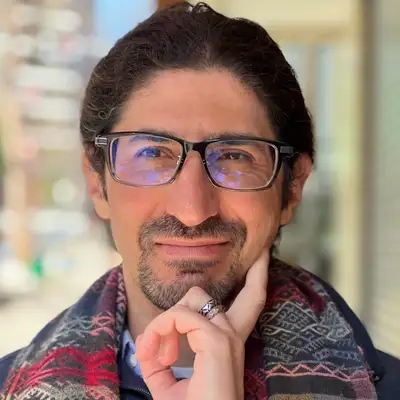
#06 AI Won't Kill Creativity — Here's Why Human Nature Always Finds a Way with Monica Coronel
Hello, unconventional founders, and welcome to The Founders Truth, a conversation with Carlo Mahfouz and guests. Episode six continues the conversation with Monica Coronel, technology and product leader, educator, and artist working at the intersection of technology, creativity, and the human experience, as we discuss the need for more adaptive systems, decentralized founder driven ecosystems, and AI's impact on human creativity.
Monica Coronel:Carlo, if you think about it, right, if you were to compare, you know, like a government versus a publicly traded company. They each have an operating model. One's got a constitution, one has a way of doing. Based on all kinds of criteria for an organization, for a company, they're gonna adjust. They're gonna adjust their strategy, they're gonna adjust their pillars, they're gonna adjust their, you know, what they're striving for, what success looks like.
Monica Coronel:Mean, argue that like employees are not necessarily citizens because they're beholden to the rules of the organization. But you rarely see, I mean, certainly in The United States, our constitution is our constitution, it hasn't changed. And it arguably, maybe like should, right? Because what happened in 1776, we're in a different world. We have a different kind of population.
Monica Coronel:I bring this back to something that's almost like ownership. Where does that lie? If we are one big team, then how do you sort of delegate ownership? Or how do you take on ownership yourself, right, as an individual in that ecosystem?
Carlo Mahfouz:I think that's such a quite deep question and a lot of facets. So, and how I would approach it, I would say, I think what I do believe works is, and then requires a change in behavior and what we accept as well. On a high level, things need to be operated on a principle rather than on very defined structures. So because when it operates on a principle, a principle has more leeway to operate under and it's open to interpretation. Yet the problem lies today, if you have people who are used to work against a rigid rule set rather than a principle rule set, they don't know how to take the interpretation and work with it.
Carlo Mahfouz:And I think that's a bit of a challenge here. I'll put it on a team perspective, right? It's one thing to come and says to a product team, like, I want you to build X and Y and Z and serve this market and be very tangible. And then this product person goes in and just become a project manager like trying to implement. That's one avenue.
Carlo Mahfouz:Another avenue, which is more established can do, they can say, you know, we want to solve this problem on a very high level, our ambition is to deliver this impact. Right, with no idea on what the solution is. So there is so much room for interpretation. Right? But that becomes on the onus of that person to have a better understanding and be able to deal with that level of ambiguity and not very rigid constraints.
Carlo Mahfouz:If we move that back to both society and the governments and everything else, I think that's a part of the issue. It's a maturity problem as well in the sense that if you are not used to dealing with that level of ambiguity and how you operate, then you're always relying on a strict set of rules, which then you need to change so frequently and so often. Yet, if it's on a principal level, which we have, like it's not we don't have those principles. Like, as you mentioned before, we have a lot of these principles on like, you know, everyone is, you know, have housing or enter a certain have a good living. Like we have some of those high level, but the implementation, then we're expecting the policy to define the implementation at the same time.
Carlo Mahfouz:And then the people below are not equipped to actually do the proper implementation. And I think that's where this gap happens. That's where we should actually be working on. Because then if we try to change the system from all ends, I think it collapses on itself in a way. If we try to keep like having, you know, rule set and very rigid structures on the top, and then or more on a collective perspective, and then it restricts basically the movement or the ability of people in below.
Carlo Mahfouz:But if the people and their ability below understand high level principles and to be able to interpret them correctly and like, you know, create an implementation that land themselves almost to shape how society, if they're not able to do that, then again, we're stuck because then you have someone who's expecting very rigid kind of directions almost or policies to secure their safety or whatever it is and no matter context. And then we have a mismatch now. We have mismatch on expectations on what people know how to work with, what they work with. And I see that in companies, just to be honest, like it's the same problem in companies and teams, 100%. They're either, you know, they're a small company, like with a founder who's basically already knew what they want, already, etcetera, and they're just kind of building and optimizing against.
Carlo Mahfouz:And then bring someone who's not used to that level of, you know, either wants more freedom or less freedom, and they fail. Even if they are an amazing kind of person, they fail because they're like not in the right ecosystem. And I think that's what we need to fix first almost, is like we need to adjust the systems to recognize that we're going technology is going to drive us to move much faster. And as a consequence of that, we need a society which is much more adaptable. And to be more adaptable, you need to have on a collective perspective, more high level principles that are guiding rather than just direct implementation.
Carlo Mahfouz:But that comes with the onboarding as well. Because without the onboarding, you're left with employees which don't know what to do. At least that's one approach. And I think it's a much more, much more difficult, honestly. There is no, again, as you said, there is no clear, like 100% answer, but there is different pathways.
Carlo Mahfouz:And I think that's the cool thing is there is multiple pathways that we can start thinking about the problem and like shaping it.
Monica Coronel:No, for sure. And I think that, you know, I don't, I would argue that collaboration within teams, within members of society, different factions of society, sure, I mean, it would be ideal, it's messy. And so you named a few things that get in the way of that. I would even argue ego. I would argue fear.
Monica Coronel:Competing incentives. Then how do you I think it's a challenge, right? To create that synchronicity that is required for successful collaboration. So you have these ecosystems, right? Within an organization, let's say.
Monica Coronel:In some cases, I know you mentioned startups, right? Like that's an empty slate, right? It's like a clean slate. You have the opportunity to start net new. And as you grow, as you expand, your ecosystem evolves, different skill sets, different personality types, your client needs will change and influence, right, how that gets structured almost.
Carlo Mahfouz:And
Monica Coronel:so there's this sort of like micro example in the startup world where you have this opportunity to create your own guidelines, lessons learned. Here you have this opportunity. So how do founders make it less, like how do they make it less messy? Given that you're starting from scratch, you're writing it from the go. Here's this beautiful opportunity.
Monica Coronel:There's no historical, it's like trying to change the culture at Google or Apple, they've been here forever. What do you say to the founders of startups?
Carlo Mahfouz:So I think this is an interesting dimension as where, you know, I think first off, starting something new requires so much courage. That's why I think I speak to founders a lot with this founder's truth, because I think it is really it's one of the most difficult things to do. And actually I would say going forward, that's the future. And in some ways, if I now flip the narrative, you can start at the top, but you can start the grassroots as well. So imagine a world is defined by multiple founders rather, right?
Carlo Mahfouz:And the more founders you have. So what ends up happening is you have different people solving different problems at a much larger scale, right? And them shaping the narrative as a whole, rather the consolidation of power. And I think that's going to happen regardless, mostly because the level of the speed that things are moving into is going to almost force it to happen as such. Because the more, and this is more of a read or at least in my read and how it works, The faster things are going, the less consolidated they can be.
Carlo Mahfouz:They need to have moving parts. They need to be like different people like managing. And I think we're going to be forced to do that because if anything has technology is forcing, how fast it's evolving, it's going to force that. And I think it's already doing that. So what we're going to start seeing is like more people kind of going into that.
Carlo Mahfouz:And I think this is where it becomes interesting is even when you are doing that, it's not a job on you only. I think that's as well has been almost romanticized so much that it's your journey, your kind of etcetera. And the reality of it against around every founder, there is an ecosystem which makes them succeed in a way. And not paying attention to that ecosystem is a huge mistake because I think we've part of, I would say, how society has built up is like, oh, it's you, the founder, the amazing, who's going go all of this hardship and deal with this almost all alone, and you're going to succeed, and you're going to it's your success and blah, blah, blah. And it's the most bullshit ever.
Carlo Mahfouz:Like, right, no one actually ever talks about all the support networks and the people and the advisers and, like, the team or the actual people. It's never about you anyway. And I I do believe the win in out of that is not dismissing that passion, like, which is driven by this, if you're intense personal, but at the same time, again, paradoxically holding it against, you know, the collective, the community around it. And this is where I start looking at like almost like micro ecosystems, where each founder is a micro ecosystem with the other and then creating the proper interfaces for those micro ecosystems to collaborate. Right?
Carlo Mahfouz:So, and that happens through interfaces. You create an We've solved this in technology, like we've solved this like with APIs and everything else. It's not like we are completely You create a common interface and instead of shaping the ecosystem, you shape the interface and where there is certain touch points. And that is a really interesting way on how to go about it. So what ends up happening is if we start looking at what kind of interfaces founders need at foundational components, and if you look at it most of the time, you're looking at financial and proper support, how to deal with it, you know, not being burnt out.
Carlo Mahfouz:Like these, I would say, are the interfaces and these everyone can, you know, almost everyone needs to kind of flourish to a certain extent and then leave the content of whatever they're fixing and problem and etcetera, and creating these competitiveness and not leaving that alone, like not worrying about that too much. Then as well, not only the founders are no longer alone in that dialogue, they are as well able to move much faster in a way without burning themselves out, which I think is the other flip of this coin, which you end up, you know, and that's why in the three books, always start with yourself. Because if you don't understand the tension and the dimensions of those and holding these paradoxes through, you're you're gonna struggle in one extreme versus the other. Because if I know anything, founders or people who are are extremely passionate, which means they're they're gonna burn that fuel, like, as fast as they can, as quickly as they can. And you want them to do that because otherwise, if they're not, like, they cannot face all of the challenges and all of the disruptive.
Carlo Mahfouz:But one is to understand that you're doing that, and at the same time, have opportunities to connect outside to kind of expand your ecosystem of who you are and make that work for your advantage, I think that's where the sweet spot it is. And I think that's what we should be really kind of going towards as we move forward and as this change becomes faster and faster.
Monica Coronel:So I go back to a question on your first book, A Reality Check. Does a founder find their true self amidst all the distractions? Everything that it takes to basically get something off the ground. I agree with you that it takes a village. But so then how does one find their true self as they're guiding their true north, so to speak?
Monica Coronel:And so amongst all the distractions, like what's your advice in that realm?
Carlo Mahfouz:Yeah, so the formula I've given is a very simple formula, which is literally like three questions almost. It looks at your context, it looks at time, and it looks at you. And typically the way I like to do is look at what is. And what is, first is like, don't look at your judgment of what it is, but what is positive, negative, everything happening around you and seeing the problems and seeing yourself and seeing, like, whatever it is. Like, what is, period.
Carlo Mahfouz:And I think that's a very hard question, even though it's literally two words, because we have been so trained to always include some, you know, either shape it positively or shape it negatively. Right? And I think there is a very harsh reality here in like just seeing it as it is by including the negative and the positive regardless. Right? I think this is first one.
Carlo Mahfouz:Second, one on the time is what is present to you now, which sounds as the same as what is, but it's not. Right? Because where you came from and who you are almost and what is the reality like whatever the past is shaping is really probably not the best thing is going to help you now, like when you're understanding, and I'll explain that in a second. And the same applies for the future. So anchor yourself or create, open up the space of your now more so than the past and the future.
Carlo Mahfouz:And what I mean by that actually in more tangible term is recognize all of these things like what is your title? What is your background? What do you know? What you don't know? Recognize all of those things and kind of let them go.
Carlo Mahfouz:Like, leave them alone. This is all great stuff, but let them go. Don't be stuck to that story. And the same, you have all of this vision, all of this expectations, all of this assumption on what the future would look like as well. Great.
Carlo Mahfouz:Let it go. What is now happening? Like, what is exactly now? And like map it out in a sense of attention. Like, okay, you spend time here and you spend time here.
Carlo Mahfouz:Again, don't judge it. Where are you spending this time? And seeing that already gives you a much better landscape on where your priorities are, how they're moving, how you are becoming, what's changing in you, which you haven't noticed. And the third one, I think is the most difficult, is the observer and who's looking. And this is interesting because here I always emphasize, you need to look as if you are looking at yourself, not looking through yourself.
Carlo Mahfouz:And that's a very different vantage point because you need to look at your biases, you need to look at your anchors, like even the positive ones, like you're a family person, you care about family. Look at that. Like, right, look at basically your already values, look at your, like as if literally you're looking at someone else and like observing almost as if it's very detached from you. And that distance gives you a whole different view of, in some ways, what are you capable for? Where do you need help?
Carlo Mahfouz:What do you need help for? And all of those things. And by opening that space, you start listening more, which is I think is the key component is, are you actually listening? Because if when you are stuck too much into yourself, and that happens very easily, like your ego shapes that narrative, you no longer listen. So in some ways it's context time and observer, And the questions both are what is, what's happening now, and who is looking at things.
Carlo Mahfouz:And in other ways is like, what matters the most, what is present now, and are you listening? And a lot of the times that just modeling that reality in that way gives you literally the foundation that you need to see, okay, am I solving the right problems? Is this the right problem to solve? Do I have access? Do I have access to the right people?
Carlo Mahfouz:Do I need to create that first? Because a lot of the times what we do is, especially if you're extremely bad, we jump too far. And to be honest, I've been you know, I've done this mistake myself. Like, we jump way too far and think, like, why is this not working? Yeah.
Carlo Mahfouz:It's not working because I didn't have access to a channel, I haven't like, I don't have the right advice, like, I don't have so many foundational things, which I'm like, oh, no, no, this is fine. Like, everyone, it's easy. I just need to work harder at it, and I sacrifice myself, sacrifice everyone around me, and it will work. No, I mean, it's still hard work, like don't get me wrong, but it's
Monica Coronel:not It's that's
Carlo Mahfouz:just not sustainable, exactly. And a lot of the times, that's what most, you know, successful founders hide, because when they tell their polished story after the fact, they ignore all of these realities because they're not nice. They're not you know, they don't make the most, you know, dramatic story that would tell you, like, the transformation that they did. They ignore this stuff. And if anything, we should stop ignoring those things.
Carlo Mahfouz:We should bring them more to surface. And then you realize how many common things exist between different founders and how becomes easier. The journey becomes easier because you are not trying to leap from here to who you are ten years from now. Not that you won't become that, like don't get me wrong, but then you actually can see some of the small things that you can do. And again, that allows you I think that allows for a much better journey.
Monica Coronel:Well, if I may react to what you just said, because it resonates very much with me, even though I'm not in the startup space. What I'm hearing is, and it's something that these are skills that need to be applied that can be useful to all of us. What I'm hearing is like, get a pulse check, do a pulse check. I also hear a little bit of mindfulness where you're staying in the present. There's an amazing, there's a really great book I just recently read, it's called Don't Believe Everything You Think.
Monica Coronel:Yeah. And it's, are you right? It's like,
Carlo Mahfouz:The last is chapter I have is do not think, listen, because we believe our thinking, like literally the last chapter on the observer is like, do not think, listen, it's not the same thing. Anyway, But please go
Monica Coronel:it's the difference between like a thought, and a thought is that, you know, I'm on camera and I'm talking to Carlo versus when you're thinking it's like, is my hair okay? I wonder how I sound. Those are not sort of tangibles. It's just staying in the present, staying in the now. The challenge that I pose to you though, Carlo, like, yeah, I mean, I agree with you and I'm on board.
Monica Coronel:I love lists. When you give me lists, Carlo, I love it because I can commit it to memory then put it into practice. Tell me though, like what does that look like on a Tuesday afternoon when someone's exhausted, they're under extreme pressure, but they're still expected to deliver, right? So I agree with you. So talk to us about like, how does that get applied and, you know, into your way of living?
Carlo Mahfouz:Yeah, so I'll speak to how I think this is interesting because we're always looking to, you know, how it solves things or like how things change. But I would say, how would you observe it or how it shows up almost? And that we can speak to more then, because I do believe it's really in the book and the reality check is the whole premise. And I don't say, this is again on a principle level, when it comes to application, you're not doing that. It's like the preparation before you go onto the stage.
Carlo Mahfouz:But when you're on a stage in this situation, and I'm going to explain that scenario in a second what comes to mind and how you behave or what changes really, is that these constraints, like the tension, they're not going to change. You're not going to fix those. I think that's part of sometimes what people think that is going to be different. The tensions, the things that are happening in your life probably will still be the same. How you kind of probably the best way for me to explain it is like how you show up to them is almost with a certain level of humility and understanding and understanding their limitations both on you and at the same time, probably the way I can express it is you become much more freer, yet you are much more vulnerable.
Carlo Mahfouz:So you open yourself to that fragility of that moment and it's in all of its dimensions, whether it's, you know, shaping your emotions in that moment or, you know, you're exhausted and show it to it almost with that level of honesty and trust that it will be almost okay, even though those things are true nonetheless. And it's very hard to explain because until you experience it, it's going to sound very wishy washy. And I can feel that when I you know, I can probably people hear that. But the truth is it really makes a whole lot of difference. And as well, what I would say your energy, even like I you know, I'll do some examples on myself.
Carlo Mahfouz:Like, you know, sometimes I'm in calls for like 567 a day. Like, right, intense conversation. None of them is easy by no means, whether strategic, whether dealing with different types of dialogues, whatever you name it. Right? And I'm tired, I'm exhausted, probably I didn't sleep, probably I woke up very early, all of those things are true.
Carlo Mahfouz:But what ends up happening and changing is as soon as, you know, I'm in that engagement, because I am almost vulnerable to whatever that moment needs, I have so much energy, which I have no clue where it came from, which shouldn't be logically possible. Right? But I have I'm just there in all of it. And don't let me know, when I finish, I'm kind of like, okay, I'm tired and I kind of need a moment. But at the same time, I'm super exhilarated almost.
Carlo Mahfouz:Like there is a certain level of excitement. And those that's I think that's the change. That's what enables you to like, because that and I think that's worth it. That's extremely worth it. And what ends up happening, it sounds almost not tangible fully, but I would say, you know, once you experience it, once you get to that point, almost as well, there is no going back.
Carlo Mahfouz:That's the interesting part. It's not something you can just ever leave almost. It just becomes who you are in every single moment. And, again, that does not mean you don't get angry. And I'm not talking about, like, woosa, like, you can send like and every no.
Carlo Mahfouz:Like, if you need to get engaged, you get engaged. And if you need to basically take the angry, you get angry. But probably the the which happened recently, you get angry and yet you're still calm. Like, seriously, like, you get angry and you get frustrated and everything, and yet you are extremely calm. And until you kind of get to experience that, it's it's very hard to explain, but it is what ends up happening.
Carlo Mahfouz:And I think that's what I'm hoping for almost everyone going through that journey or trying to explore, like to have enough curiosity to try to say that possibility exists and can it exist for me too anyway.
Monica Coronel:If someone were to be listening to us, we'd be like, okay, yes, I'm in agreement. I wanna practice this way of being, as you described it, not perfectly, it's honest, is I mean, we're all it's it's something that they can just start. Right?
Carlo Mahfouz:Yeah. Yeah. I mean, a great starting book is both, you know, the book, Starting Place, is the book a good place? This podcast as well, because we're gonna keep having these discussions in a in a extremely open and vulnerable way, not necessarily always giving you the comfortable answer that you're looking for, but don't underestimate what shifts even a little bit, even when you don't have a complete answer. I think that's probably another dimension which I'll make sure, is things move and shift even when they are not complete.
Carlo Mahfouz:And those shifts and complete, we miss them so much because they are the nuance, they are the subtle changes, and they are actually extremely valuable in that journey as well.
Monica Coronel:We touched upon the themes of your books a I little don't know if there's anything, I mean, I've certainly asked you the questions that were the most pressing to me after having gotten a basic understanding of your body of work. For me, walking away from this conversation, it's just spurred up more questions for me, which is exciting. And again, my conversations with you are always, we can go on forever. But getting back to the challenges that AI is posing on us and what it means to be human.
Carlo Mahfouz:Yes.
Monica Coronel:You know, I'll say this as a aspiring illustrator, as an educator, as a professional technologist, I see the challenges posed in those three areas. You know, the fear that comes with with, you know, losing the humanity of it, losing the craft, the struggle and the striving for perfection. I know my students, they wanna get good grades, and so they wanna be perfect, and so there's the temptation to go for perfection over the process and I think what your trilogy does really elegantly is to open up this dialogue and I've appreciated going through the discussion here today and my prior discussions with you. What do you say to that part of it as we wrap up this conversation, Carlo? Like what do you say to what's coming, the future, right?
Monica Coronel:The loss of, you know, think of the, are we losing future, you know, Rembrandts or, you know, future poets because we've got this technology that facilitates, you know, the output so quickly and so easily. What do you say to the students out there, to my students or any current student that is looking for those straight A's and the sacrifices that technology I wanna say a sacrifice because we wanna be good, we want the output, we wanna get it over with, get it done. Here's the product, look at my beautiful painting, look at my poem, look at my thesis or whatever. What do you say to us? Can inspire us a little bit on I know you don't have fear.
Monica Coronel:I have a little bit of hesitancy. I'm excited about the technology, but I'm also hesitant because I was in the apparel industry for many years. The product designers, that beautiful crimson that you have on was created by someone, your colleague, like everything about it came from human hands and human thought and a discussion, a collaborative team. I say a lot of this just because there is fear. I know that there's How do you help us navigate that?
Carlo Mahfouz:I think it's a beautiful question, Monica. I probably here's how I see it and in the hopes that it kind of inspires others as well to probably see it the way I do, or not necessarily see it the way I do, but gives them a little bit of hope, if anything. I don't believe we can lose our humanity or creativity. I think creativity and humanity is like this very nasty weeds will always find its way and like what kind of creates its path no matter what's thrown at it. It's like a it's like a very aggressive almost thing that we have that no matter what the environment says, it will always find its way.
Carlo Mahfouz:But we might lose to like kind of reckon on the fear and etc. We might lose the format and we approach it. So we might lose in how that graph gets created or how we shape it. Paintings used to need to depict reality. When photography came, people started doing impressionism.
Carlo Mahfouz:People were just trying to depict reality in the first place when they're doing drawings. But then when the photos came and they were more real, we started seeing more abstract and impressionism. That's the opportunity space. Creativity didn't stop. It just found another like nook in the valley and like created its own path.
Carlo Mahfouz:And it's beautiful. Like it's amazing as well.
Monica Coronel:And political as a form of resistance as
Carlo Mahfouz:As a form of resistance, exactly. So that's exactly what was going to happen, like it on a high level. I don't know how though, that's the interesting part. Like I have no clue in what that form would look like, I don't know. But what I know is that's gonna happen for 100% sure.
Carlo Mahfouz:And if anything, I I would say, and I can see this exhaustion already with AI content or other, because people as well are using it probably in the wrong way, but I would say people will start yearning more for the poetry and the stuff, which probably, you know, an AI or not, will be earning more of the for the art. And I think this is the this is why I think we underestimate ourselves as a human. We always like almost deduce ourselves because this society has kind of gave us this like box to fit in, and so we've reduced all of these things. But we underestimate the desires which will be birthed by this kind of, we're going to rise to the defense whether we like it or not, and we're going to find these nooks and crannies in, and we're going to be creative and more human than anything else. The more we see that pushback, the more we're going to push against it anyway.
Carlo Mahfouz:And I find hope in that. And that's why I don't believe AI or I mean, I use AI for generating images and etcetera. And I find it, like, for example, as well an extremely creative process. Like, I I'll give you an example which I am using. I write like poetries, and then I transcribe those poetries with AI to a definition of a prompt, and then I use that prompt to create an image.
Carlo Mahfouz:And then I use different styles to shape that image. Do you know how much in that process I exist in that creative process? So much, even though AI is almost in a lot of the steps of it, but I am I'm choosing which color and like how I move it and general AI is generating the image at the end of the day, and AI generated the prompt. I didn't. I wrote the initial material, for example, like, That process, I can guarantee you we're going to see much more of that and what that looks like.
Carlo Mahfouz:Yes, in some form there will be loss, I don't think, but I think as well, loss is part of life and change. And we shouldn't, if we optimize our society to work with loss rather than just trying to stop it, I think we're better off as well. Like it's the same conversation with death or anything else, like it's just part of the natural cycle and it has a beauty of its own. Like there is this rejuvenating cycle is the sustainable cycle. So loss is part of it as much as anything else.
Carlo Mahfouz:That does not mean we should not, you know, we should accept loss as it is and say like, no, don't do anything about it. But no, if we optimize for it, then we're able to cradle it, we're able to manage it in a different way, we're able to not have people suffer extremely as a consequence of it, whether from a career perspective and all of those, and that's doable. Right? And I think that's where I kind of I balance things out, and then that's and that's really where I'm hoping we go towards. And it's gonna be hard.
Carlo Mahfouz:I know nothing is gonna be easy. I think it's already it's not easy, but I think that's okay. There is opportunity in that.
Monica Coronel:I think it's beautifully well said and very, very it's very Buddhist. The root of all suffering is the inability to accept that everything changes. I think Yeah. It's optimistic. I share your optimism.
Monica Coronel:It's exciting, and just being open to the changes, should all endeavor to be that.
Carlo Mahfouz:Yeah, awesome.
Monica Coronel:Thank you so much, Carlo. This has been a privilege to have this conversation with you, and I've thoroughly enjoyed it.
Carlo Mahfouz:Beautiful. Thank you for your engagement and presence throughout of it. It really drove very amazing dimensions that I didn't expect going into, but definitely it was beautiful and had a lot of depth in it. So thank you.
Monica Coronel:Oh, I appreciate it. My pleasure.
Carlo Mahfouz:Thank you so much for listening to The Founders Truth, a space for opening your mind to new possibilities and thinking. One question to reflect on is how are you leveraging shifts as a way of thinking to being adaptable rather than loss or gain?
Creators and Guests