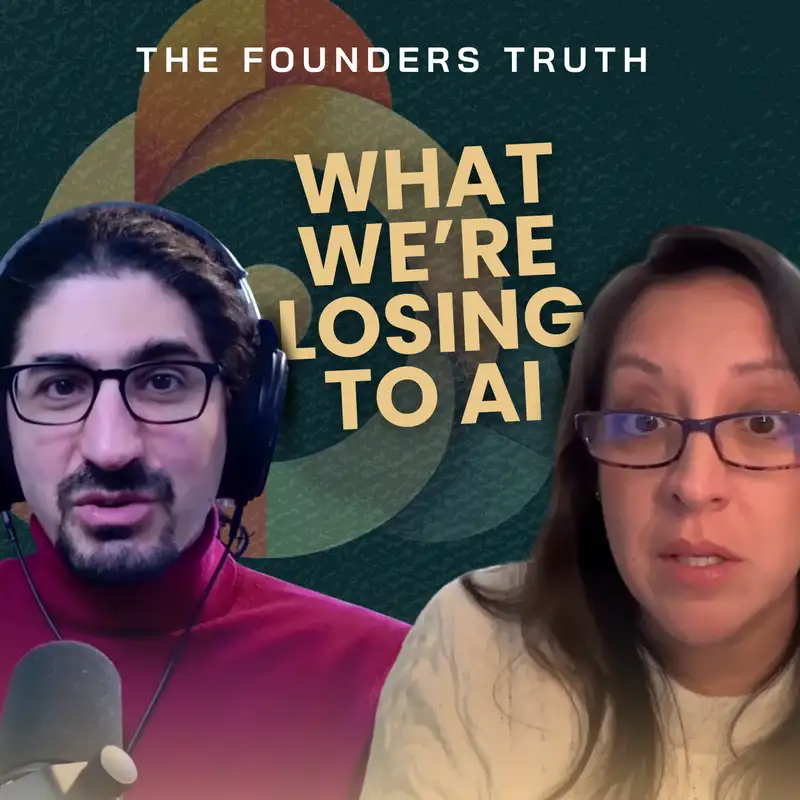
#05 Bridging Technology, Humanity, and Art: A Conversation on Innovation and Identity with Monica Coronel
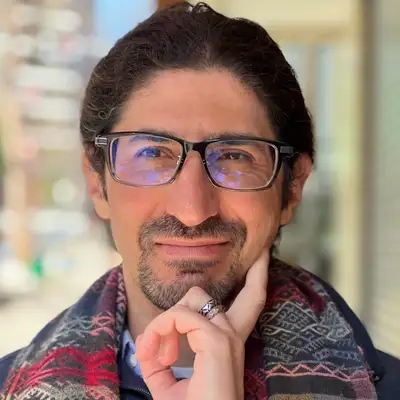
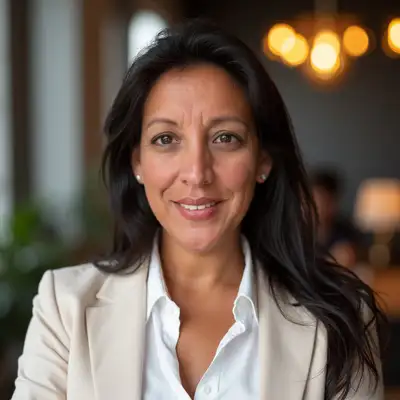
Hello, unconventional founders, and welcome to The Founders Truth, a conversation with Carlo Mahfouz and guests. In episode five, I'm excited to be joined by Monica Coronel, technology and product leader, educator, and artist, working at the intersection of technology, creativity, and the human experience. And that's exactly where our conversation will be touching on, revering the journey from tech to art and its power, bridging the digital divide in communities, and mapping organizations to society and the possibilities that creates.
Monica Coronel:Hi, Carlo. Nice to see you. I'm really excited about our conversation today. So let's just dive right in, right? Yeah.
Monica Coronel:And so my thought about our conversation over the last few days, I'm hoping that today isn't necessarily so much about answers because you pose a lot of questions in your work. And I know that at the time that we are in, the moment that we're in, it's inevitable that we're gonna keep coming up with more and more questions. So that's kind of what I'm hoping we're gonna surface is even more questions. So Carla, your work has sort of Is sitting at the intersection of technology and leadership and human experiences. However, part of it is that none of it really fits perfectly into these frameworks, right?
Monica Coronel:Like into the systems, as technologists, as product leaders.
Carlo Mahfouz:And
Monica Coronel:so with as AI begins to or has, you know, been applied for optimization, culturally, we're sort of tightening that grip. Right? Because the technology is sort of combating with the human aspect of it. So I'm personally increasingly interested in what we're losing at that intersection. So we I've seen, you know, professionally and academically, you know, sometimes we're we're mistaking intelligence for wisdom.
Monica Coronel:Yeah. Or, you know, progress for meaning.
Carlo Mahfouz:Mhmm.
Monica Coronel:So my question to you is, you know, what Like, I'd like for you to start, right, because I'm gonna assume, I don't wanna assume anything.
Carlo Mahfouz:Okay.
Monica Coronel:And I'd like for you to start with, that's my dog, by the way. I'd like for you to start with, can you tell me a little bit about your vision? Because I can tell you what my take on it is, but I'd like to hear it from you. Let's start with And then let's go from there.
Carlo Mahfouz:So I think ultimately what I believe is the place where I want to go to. I think we still, and I'll kind of back backtrack into some of the issues we're facing that you highlighted some of them as. I really want this kind of isolation game that we have between technology and people and society and like all of the segmentation of, you know, which carries over with it, good or bad, etcetera, to almost go away. Because I think that's part, the big part of the problem is we're assuming all of these things as if they are not interconnected or interwoven and as if at some point we can start segment and remove some of them and deal with them individually. Like we've come to a point where and I think because it's I think it's a reasonable thing because how quickly technology has moved, we've come into starting to categorize it as like a human and technology and etcetera.
Carlo Mahfouz:But think that my vision for is that a lot of these boundaries stop existing to a certain extent, but that does not at the same time diminish the human capabilities or the technological advancement, like in some way, not by restricting and holding back, but by understanding that the interplay is necessary and it's inevitable almost. And that carries risk, almost very high risk, that carries a lot of uncertainty. But I think we should face that head off rather than just trying to either fall back to what we think worked, which I question was it whether it really worked or not because it's got us here anyway. And I I don't think we agree that here is a great place to be both as a society and what has technology done and all of those thing. So this dissolution both of who we are and as well that carries on for me as well as you as an individual versus a collective.
Carlo Mahfouz:Like I carry it not only on, you know, you and technology, but you as an individual and us as community. What does that mean and how we can still be true to ourselves and be true to the community, and how these things are not necessarily mutually exclusive, which a lot of the times it feels like it is, especially if we take it on a global scale between nationalism and globalization and all of those things. So that really is how we can remove these barriers to see them as one. And as we'll start seeing them as one, start solving the problems with that tight relationship, which feels very complex. But at the same time, I think simplifying it in that way, we will start understanding what truly matters now, what should be prioritized rather than just creating these opposite camps and trying to have one camp win over the other.
Monica Coronel:It's a paradox.
Carlo Mahfouz:Yes.
Monica Coronel:Right? It's a paradox. So we're not necessarily It's less so about resolving it, but because I don't think that there is necessarily resolution. It's like coming to terms with, we're gonna stay in it because technology evolves. There will be massive disruptions throughout the continuum.
Monica Coronel:But it's how do we stay in it? And so given your perspective and your vision that you just described, how did you arrive at that? Like, did that come from? Given your background, you know, coming to this country, like, influenced it?
Carlo Mahfouz:Yeah, so, I mean, my background is heavy on the technology side. I mean, all my years in engineering, but even actually before that, you know, I started probably doing programming when I was very young. So I've always been, and I've actually, for most people, technology has probably in the general sense was probably a bad thing. But for me, it was a great thing. It was a place, a safe space for me where I kind of got to you know, think and, you know, and move forward in the world in a lot of ways, both from a career and from a personal development or leadership point of view.
Monica Coronel:But it was more tactical, right? It's at the early part, because I'm a technologist as well, and the early part of my career was very, know, here's a problem, there's a tool to fix the problem, Rinse and repeat, train it. So it becomes tactical, it becomes this tool, and then tools evolve, and then automation, and then So that sort of operational infrastructure piece is I think how we all start.
Carlo Mahfouz:It holds, that's the interesting part of it. It holds a certain level of absolute clarity in any ways, because it is a, you have a problem, you fix it, you structure it, like, right? It holds that in such a really neat way that almost is good. Like, I mean, I'm not going to say it's bad, but once you but that comes with caveats. You know, what end up happening is and I've experienced this, like, kind of overall journeys.
Carlo Mahfouz:I mean, I've held the paradox and I still hold the paradox because that's why I kind of so I think at a certain point of my life, this kind of isolation and clarity, extreme clarity, not understanding that there is things beyond that got me really depressed. So I had moved here, I was alone, I kind of couldn't I struggled with this new culture that I was introduced into. And all the answers that technology has given me as a safe space, and also society as a whole, that there is a clear answer for everything, started falling apart. Like, right? I had anxiety issues and everything else, like kind of I was crashing hard.
Carlo Mahfouz:But then through that process, what I realized coming out of it was, you know, there is another world which already opened to my eyes to it, which was art, which is very, very kind of completely almost the opposite. Started with playing guitar and then singing after the fact. And I've started to recognize more and more so like the power of that uncertainty and that kind of ambiguity, what does that bring into the world? And in some way, not that I am replacing one with the other. I think it's what really becomes important.
Carlo Mahfouz:And I think that's what materialized a lot when I wrote Reality Check, my first book. And part of that process was not that I'm replacing one avenue versus the other avenue, instead, actually, I'm kind of holding both. And in the gap of both, you get that level of understanding where there is a need for having things which are concrete and clear and some answer on, but at the same time, is an extreme value in having things which are, you know, more open for interpretation, more that have a certain level of uncertainty because reality in its entirety is both, like it's never either or. As much as we like it to be, as much our mind kind of want us to optimize tactically to go there, it is not. I think, you know, and coming back to the art and like more of the fluid, I would say, domains and I would say skill sets as well.
Carlo Mahfouz:Once we start losing access to those, we start losing that dimension of our humanity. And I think that applies to technology and everything else. So I kind of started seeing all of these things being part of the same picture, not different pictures. Like right? And that's what got me here.
Carlo Mahfouz:Like, you know, on a one extreme was technology driven, very precise and everything and control freak as much as you like. And another extreme was, you know, Oprah and opening myself to a level of vulnerability and ambiguity that I never thought I could imagine, but it was such a relief. And then marrying those as part of the same reality gets you to understand like, this is what it is. And there is a lot of immense potential in that. It's not a downside.
Carlo Mahfouz:And we don't have to choose, actually, we just have to be able to, as you said, sit in it, be in it, and like kind of part of that, we start seeing more possibilities. Start seeing, honestly, start seeing the world very differently. And not only that, we are able to prioritize things differently. And I think that's the tangible aspect of it, which I would have never guessed that that would be an outcome or the result of it.
Monica Coronel:I think it's, you know, we talk about struggle, you know, especially in a capitalist society where we're so metrics driven, it's all about KPIs, it's all about how to quantify and measure and profitability. You mentioned like this, period in your life where you almost pivoted to include the arts, to include this piece of expression, this avenue of expression that you found. I find myself in a similar boat, particularly post COVID, most definitely recently in the middle of my career where it was so corporate technology, we're in the advent of a massive digital transformation at the global scale, chasing these skills, always needing to upscale. You and I have our entire careers and yet we're still, okay, we need to get more certifications and we need to get more education and more I say this because we are in a unique place in that we live in The United States, we're in a very developed economy, We have access. So for me, the question has been lately, who are we leaving behind?
Monica Coronel:What's the impact to those that have less opportunity? Whether it's a language thing or access to education or access to basic infrastructure like high speed internet, computers. I see my parents experience something where, they're like that generation, the octogenarians are completely left behind. So how do you buy televisions and just turn it on for them? You can't.
Monica Coronel:How do you sign up for anything without this sort of, again, it's about accessibility. What's your take on that with what's coming? How do you bridge that? How do you do you know what I mean?
Carlo Mahfouz:Yeah. I understand. I think the reality is harsh that we will face some loss. I think that's part of it. Like, think but what we can do, and I think we can bridge more.
Carlo Mahfouz:And in some way, I do believe technology has created more bridges than we think we have, yet the onboarding never took place in a way. And I would say that, and I agree, some of the infrastructure is not in place a lot of the times, which makes it even more inaccessible as a whole. And I think that could be fixed. Like I think that could be approached differently. And if anything with AI and like what the technology is ramping up towards, I truly hope that some of that access to this knowledge cross boundaries and everything else becomes a little bit more open and allows others to kind of tease it.
Carlo Mahfouz:And probably the way I see it happening, I don't think it's going to happen on its own. And I think at the same time, this tension that we see today between holding IP in different places and etcetera, what I realized even with the days of early internet and Google, that once the cat is out of the bag, the cat is out of the bag, almost like it's very hard to put it back inside. So more so is like how do you streamline those avenues and make sure they exist. And I think with AI is the same. Like right now, I would say AI is already bridging out.
Carlo Mahfouz:If you have access to it, it's bridging barriers of language. So if English is not your first language or other language, you're able to move some between some of these domains much easier. It's as well bridging between disciplines. If you are an engineer and trying to send an email or if you're, you know, a scientist and trying to get an analogy to kind of so it's creating those things. And it's not doing a perfect job at it.
Carlo Mahfouz:But the thing is we don't need perfect. Like, I think that's another reality. We don't need perfect job at it. We need actually just, you know, good enough in a lot of ways, and good enough is a huge improvement if you didn't have access to something. I think when it comes to infrastructure, it's a more difficult conversation.
Carlo Mahfouz:I think, you know, if you lack electricity or consistent electricity or good connection for the most part, that changes, you know, that's a much more difficult dialogue as a whole. And I think that's where you need, you know, communities supporting communities, which I think today we're starting to see that dwindling a little bit as if, you know, I think the narrative around it has been shaped that, you know, helping others is like almost putting you in a bad position. And I think that narrative probably could be different. And the fact that it changes so frequently and in between what people believe is right and wrong is a bad sign, but as well as a good sign that we can shift it again into a different dialogue. One which allows this expansion and supporting on the infrastructure side so the accessibility is.
Carlo Mahfouz:Because the technology delivers it. Even if we see in the days of COVID, Zoom and all of these remote tools did not exist when, did not just surface that day, they were available for ten, fifteen years pre COVID. Yet a lot of people didn't necessarily know that they existed and like didn't even use them, Right? So again, it ended up requiring a pandemic to realize, okay, you have already the technology and now almost every country and you see it in education and health care, especially in education where overnight schools had to adopt and such a mess and disaster. Right?
Carlo Mahfouz:Because they you know, one day they were like doing in class, and I think the classroom needs a lot of updates besides that. And then the second day, the technology was here. But the technology has been around for a long time. The problem is that those institutions never had the bandwidth to adopt it properly and never were given the bandwidth to actually start incorporating some of these tools. And then that goes back to what I was talking about earlier is once we started moving these barriers and the solution between like where tech stands and stops, because it's, you know, in person is very important, but not having the accessibility to do a remote session or open up like now Coursera, you know, my brother or cousin like in Lebanon can watch, take a class in an institution here, I had to, you know, move countries almost to have access to that knowledge or even be exposed.
Carlo Mahfouz:Now a lot of it is much more exposed. And again, it's not perfect. Like, I'm not saying it's the ideal world, but it's something. And that's something is worth recognizing too. We always dismiss the nuance and the small shifts, we're always looking at the big, like kind of amazing achievements.
Carlo Mahfouz:But there is small things which could be major improvements, especially if you didn't have access before and today that became available.
Monica Coronel:I think it's interesting because the, you know, it took a global pandemic to advance the remote, you know, working remote, and all these Zooms, and all these different ways of collaborating, like with different teams, with global, you know, I've worked at global organizations and it took a pandemic to be like, oh, we really need this. And so then the priority shift and all towards the end game of keeping the lights on, making sure you survive it as an organization. Because of those external Think about sustainability. We have a global crisis with clean water and clean air, the warming of the planet. And so we are aware of it.
Monica Coronel:We've been aware of it. Right? We know that it's here. And so what are the catalysts that cause industries to change? To a certain degree, it's politically, like whether it's And I would argue that consumers, consumers banding together and saying, We are going to, almost like a cultural team.
Monica Coronel:Like we demand our products be of this level sustainable so that we're not further impacting by consuming XYZ products. How do you see that? What are other kind of catalysts for organizational change given that like we don't want to hopefully wait for the next epidemic and we don't want to, you know, get so far down the road where, society will agree that there's going to be this norm or there's this external conflict or this external force upon us. How do we Those are extreme influences. Like, is there a way that you see where that would happen gradually and organically?
Carlo Mahfouz:Yeah. I feel I think you highlighted some dimension, which I think is really important, is a lot of the times the consumer don't understand how much power they hold, especially in what technology has enabled and what they hold.
Monica Coronel:Consumers and voters, by the way.
Carlo Mahfouz:Yes, of course. I mean, I think, you know, in a lot of ways is the smaller people, like the smaller set in a cogwheel, how much influence they have on the operation as a whole is a lot of the times undermined because as well, it's not flagged enough. And I would say part of the initial, I would say, kind of conversation, it needs to be a conversation and dialogue. I think we've lost the dialogue. We've lost the conversation.
Carlo Mahfouz:So we need to bring that back up. And what the dialogue and the conversation is to me is creating a space where ideas float back and forth without trying to make them right or wrong. And I think the reason that's very important and that's very powerful because any dialogue holds the vulnerability and holds change. Because in the space where people it's a paradox as well, where almost everyone wants to come in with an agenda and everything, but it's when you come in and not only allow for others, give others a way out or a space to exist, but as well come with the less seriousness to it in a way. And then this air of lightness, there creates a room for actually a discourse to happen.
Carlo Mahfouz:And some of these skills we used to have, I know we kind of lost along the way, like because, I mean, I worked in corporate all my life and we've always optimized for like, okay, what do you need out of this? Could be prepared, like set all of these things. But through the dialogue, actually, the more concrete it is, the less useful it is anyway. Because then you're coming and just giving a webinar and like giving a presentation and telling you this is what you need to do and this is what you need, and then you block yourself. And again, I think we underestimate how influenceable we are as a human beings.
Carlo Mahfouz:And as if we are like, you know, resistant, no, we will still push our ideas and we will still do. And I'm like, no, like behavior always dictate. If you have an overpowering voice, the second you take an opinion and they think it's true, then you stop listening to anything else, period. Like no matter how much you think you have a good, you know, strong will or whatever, you know, your mind will just block everything else, you stop listening. And I think we have an issue now of stop, like not listening, almost big chunk of people are stopping, you know, they stop listening.
Carlo Mahfouz:And it's an interesting thing because if you realize, you stop listening when you feel threatened. Like if you feel someone might hurt you, usually you will kind of close-up, Right? And I see more and more closing up where people like just don't want to listen or like they feel like automatically attacked, and then they're like, okay, I want to be safe. Like I'm struggling so much. And I understand that.
Carlo Mahfouz:Like I get that very well, if anything. But on the flip side of it, the opportunity is to recognize that, you know, almost everyone is if everyone becomes in that position, we end up in silos and we end up in no communication at all. And we end up digressing as a whole, like everyone loses. That's the interesting part, like no one wins, everyone almost end up losing it regardless. So I think the potential lies in really reinvigorating the dialogue and allowing for the dialogue actually to hold more space.
Carlo Mahfouz:And at the same time, highlighting the power that technology has given every single voice. Today I can be sitting here and I post something and someone in the whole different side of the world can read it. And that level of distortion between time and space, our mind struggles to comprehend, but it's now available to you. Like that's the level of power you have, probably with too much power that you actually don't know how to actually make use of. And I think that as one needs to be part of the dialogue, a part of, I would say, the onboarding to the technology to enable communities as a whole and consumers as a whole understand what they have under their fingertips, which I think for a long period of time that felt as if they hold no sway or a kind of, they are just, I always say this and I'll probably move on to, is if you think you can influence others, if you think you are always you can be influenced and they say, you know, social media is influencing me, your power to influence is as much as you can be influenced.
Carlo Mahfouz:Like it goes both ways, even though you always expected that it's going one stream, yeah, TV influences you and the rhetoric influence you and politics, but you can influence as much as you, you know, that all of influence that you're getting, you can do the same. And that's an extremely powerful thing that almost almost is dismissed in the conversation, and it's worth actually kind of bringing back.
Monica Coronel:It speaks to your body of work, right? Your trilogy series, right, where you start with the individual. Yeah. You move on to discuss you and the team. Yes.
Monica Coronel:And then ultimately, like society.
Carlo Mahfouz:I
Monica Coronel:question the What comes to mind, Carlo, is the UN Global Compact, where all nations got together and we decided many, many years ago, listen, as humanity, we have these basic agreements, right? Everybody needs to have access to water and housing and justice and all these global agreements. Basic humanity. I wonder now if we need to not just take that a little bit more from an implementation standpoint. Do we now need a digital age sort of agreement?
Monica Coronel:Do we need something where it's more we versus I? I'm not sure if I'm putting my finger on it, it feels like is at the like we need to build something new.
Carlo Mahfouz:I think it's an interesting dilemma in a way. I believe when it comes to those things, we always treat them as static rather than we treat them as living organisms. Part of the trilogy, I highlight three characteristics which surface in every book. Each book kind of contains one, which is ambiguity, absurdity, and aliveness. And when it comes to society and our interaction, there needs to be like a certain aliveness to as well what we put in contract or what we agree on as a community, and it needs to be a living thing.
Carlo Mahfouz:And the reason I say that, I had an interview with AI ethicist, Olivia Gamblin, a while back. And one of the discussions we brought up, which I think really pins the point of how difficult this is, is morality. So is morality static? What happens if morality gets stuck in one view of the world rather than evolving with it? So imagine like a hundred years ago, women couldn't vote.
Carlo Mahfouz:And then, the constructs around society and what shape it is sat in that morality. And what happens if the thing is those, if they didn't change and kept changing from a more relevant standpoint, from a value standpoint, from all of these dimensions, they don't keep evolving and understanding the current landscape admitting into themselves, then it's a very high risk, right? Because then we are stuck with kind of old rules, different playground. Right? And so that given, probably today we don't have the infrastructure, or I think we have the tools, but we don't have the infrastructure to have something which is living and carrying with us and evolving in that manner because all infrastructures are set up to be rigid in a certain way and hold true for a certain period of time.
Carlo Mahfouz:Right? But what if that, you know, truth needs to be evolving much faster? How do we go about that? And I'm not saying I have an answer, but I think we need to start thinking in those terms. If I want to simplify it the most in terms of code, you know, libraries usually update so frequently.
Carlo Mahfouz:We use we keep like a year and a half and backward compatibility and a year in the front and like forward compatibility. And that's about it. Like, literally three years is your sweet spot. That's a library which is doing an amazing job. A year and a half is usually like, that's it.
Carlo Mahfouz:And you're evolving consoles like, you know, these libraries are update and they have to update, like from an optimizing efficiency from making it. So like the structure of rule and policies should follow. Today policies are lagging and probably they need to be a little bit slower. I think there is value in the slowness. I always struggled with that, but I think there is value in some things being slower than others and like kind of solidifying and then changing and then solidifying and changing.
Carlo Mahfouz:But that does not mean they don't change, for example. And I don't think we have I think that technology will help us do that more. I think AI has a role to play if we use it correctly in that sense, and not having it get stuck in whatever is its vision of the past, because that's what it does a great job in, but as well in how it shapes the future. And it shapes the future not by predicting it based on the past, but by actually enabling the infrastructure to modify the rule set as we go through. It's a very interesting So it's more tackling the foundation rather than the content of what needs to be.
Carlo Mahfouz:So it's not like shaping the policies and predicting them, but creating an infrastructure that allows them to be commodified on a much faster basis in a more real time fashion.
Monica Coronel:Carlo, if you think about it, right, if you were to compare, you know, like a government versus like a publicly traded company. They each have an operating model. One's got a constitution, one has a way of doing. Based on all kinds of criteria for an organization, for a company, they're gonna adjust. They're gonna adjust their strategy, they're gonna adjust their pillars, they're gonna adjust what they're striving for, what success looks like.
Monica Coronel:Would argue that employees are not necessarily citizens because they're beholden to the rules of the organization. But you rarely see, I mean, in The United States, our constitution is our constitution, it hasn't changed. And it arguably, maybe should, right? Because what happened in 1776, we're in a different world. We have a different kind of population.
Monica Coronel:I bring this back to something that's almost like ownership. Where does that lie? If we are one big team, then how do you sort of delegate ownership? Or how do you do you take on ownership yourself, right, as an individual in that ecosystem?
Carlo Mahfouz:Thank you so much for listening to The Founder's Truth, a space for opening your mind to new possibilities and thinking. One question to reflect on is, how are you engaging in a dialogue that gives room for new ideas to flourish? And how are you enabling the artist in you to support that thing? Part two of this conversation with Monica comes next week, so stay tuned and until the next episode.
Creators and Guests